|
Getting your Trinity Audio player ready...
|
Lush New England gardens, so bright and beautiful during the summer season, are often forgotten after the harvest, as the region’s fall foliage takes center stage with a spectacular show of colors. However, the autumn yard and garden can offer an abundance of eye appeal throughout the fall season. Several flowers and perennial plants flourish during the cool weather, and a few purposely placed pots provide the perfect complement to a backdrop of brilliant foliage.
The following suggestions reveal how well-chosen fall-friendly plants can translate into an enviable yard and garden well into the autumn season.
Ornamental Plants
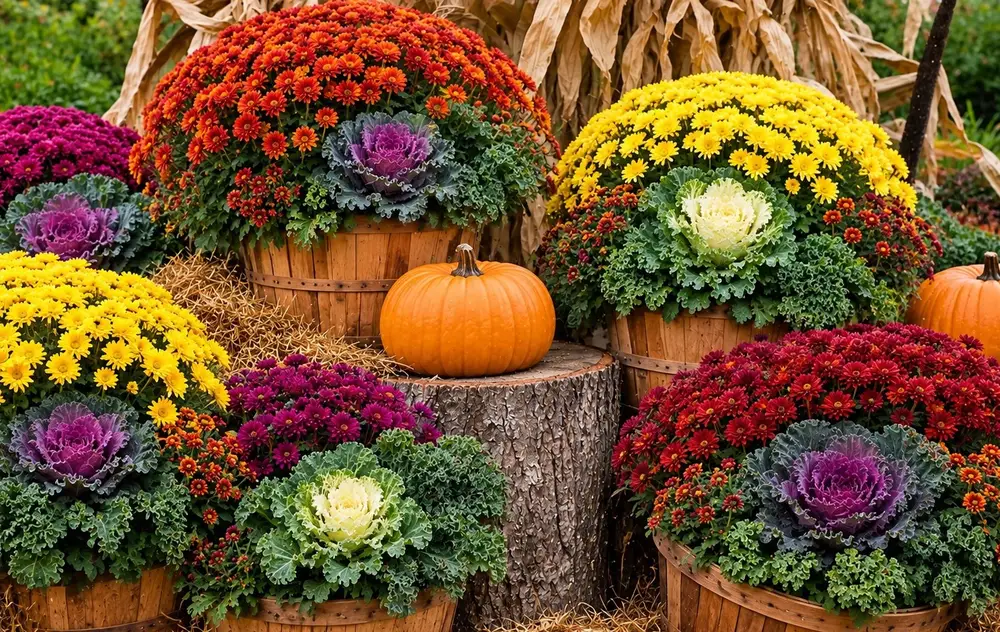
Cabbage and Kale: It’s no wonder cabbage and kale are popular choices to replace waning annuals, as they offer an attractive and affordable option for fall window boxes and pots.
As a bonus, the colder it gets, the brighter their colors are.
Typically, the heads of these ornamental plants are available with hues of whites, reds and pinks. After light frosts, the colors in the plants intensify, providing an attractive display until the end of November.
Propped in a window box, the plants replace the empty space where summer blooms once were with the rich colors and textures of autumn. Cabbage and kale also work well as edging plants and can stand on their own when planted in pots and perched on an outside entranceway. Best of all, cabbage and kale are not fussy plants and are easy to keep up.
Note: While even cabbage and kale sold as “ornamental” plants are technically edible, since those with brighter colors are bred for display, they are often too bitter to use in cooking or salads. Moreover, these decorative plants may contain pesticides, so they shouldn’t be eaten.
Ornamental Grasses: Wispy grasses add dimension and visual interest to a landscape like nothing else. Reminiscent of seaside vacations, ornamental grasses are a sentimental delight that can last throughout the New England fall season. Whether grasses are spiked, boast feathery plumes, or have a fountain effect, their appearance can make a big impression. Available in shades from cool to warm and in a wide selection of textures, grasses can be the spotlight of a garden or used as a backdrop to other autumn flowers or plants. Hardy perennial grasses are easy to care for, and some varieties can tolerate frost and light snow.
Fall Flowers
Mums (Chrysanthemum): Hardy fall mums are the quintessential New England flower. Pots of mums are a familiar sign of autumn, adorning the doorsteps of both city and country homes. Rare is the fall landscape that doesn’t include plots or pots of mums in rich harvest hues. Mums’ availability in early, mid and late blooming varieties ensures a yard and garden dotted with color all season long. With colors ranging from whites and yellows to rust, reds and purples, the long-lasting blossoms set the scene for fall décor. From formal centerpieces to Halloween displays, hardy mums, which are available in pompom and daisy blossoms, are the season’s most versatile flower. Mums are a perennial and with care can be “wintered over” to come back next year.
Montauk Daisies (a.k.a. Nippon Daisies): With a nod to summer, the fall-blooming flower, with its big blossoms, offers a breath of fresh air in the autumn garden. Montauk daisies, which resemble a larger version of a traditional daisy with white petals and a yellow center, lighten up the cool-weather garden and are a hardy choice for New England fall displays. The perennial plants, which can survive light frosts, grow about three feet tall and just as wide. The Montauk daisy’s impressive white petals serve as a prominent focal point in the fall landscape into late fall.
Icicle Pansies: Who can resist the adorable “pansy face” of these colorful and playful blooms? A generational favorite, pansies make their annual appearance in window boxes and along walkways, bringing a sprinkling of brilliant hues to the fall season. Boasting a wide array of colors, ranging from solids to mixed tones, names such as Circus Mix, Velvet Glow, Purple Tie Dye, Pumpkin and Eclipse promise a delightful display. Blooming until late fall, the biennial plant, if properly wintered over, will blossom again in the spring.
Sedum: Native to New England, some varieties of this late-blooming wildflower change color throughout the season. A popular rock garden and rock wall plant, sedum is available in many varieties and produces an interesting array of flowers, including purple, white, red, orange and yellow. The plant, which can bloom through October, is hailed for both its interesting foliage and wide range of flowers. Extremely tolerant, the carefree perennial is easy to grow and does not require a lot of watering, making it ideal for hillside slopes or as pathway ground covering.