
|
Getting your Trinity Audio player ready...
|
SPENCER—Town officials met to help shape Spencer’s solar future with the creation of numerous solar bylaw amendments which spanned from agrivoltaic (dual-use) solar projects to general requirements for new solar projects and specifics for solar energy battery storage systems.
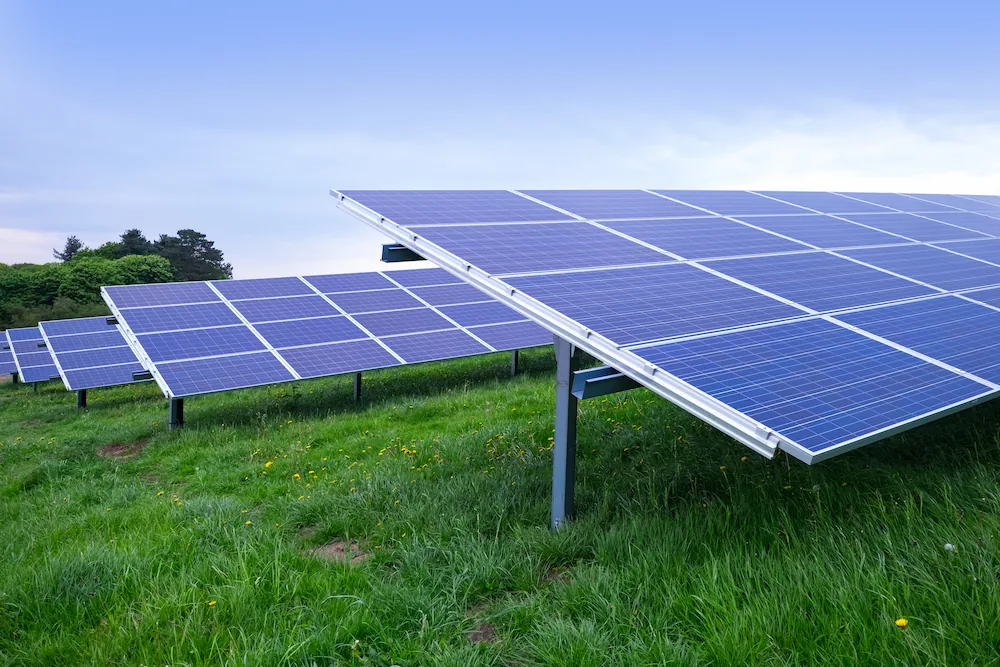
Last week, the Spencer Planning Board and Town Planner proposed solar bylaw amendments. Massachusetts has incentivized solarization and is pushing hard for green energy. The Clean Energy and Climate Plan was released in 2022 and expresses Massachusetts’ plan to “maximize the ability to realize a 2050 future in which the heat in homes, power in vehicles, and electric grid can all operate with a minimum reliance on fossil fuels and natural and working lands can be protected from conversion and better managed and restored to enhance carbon sequestration.” A large portion of this plan depends on the large-scale installation of solar energy-generating sites across the state. Central Massachusetts’ non-mountainous terrain and open fields make it a prime place to locate these large-scale solar energy systems, especially in rural communities like Spencer and surrounding towns. The result: In Spencer alone, 23 solar energy farms covering nearly 350 acres of property are either currently operating or are in the planning/construction phase.
Planning board members discussed Massachusetts’ solar initiatives and what the members see as a lack of regard for individual community members’ views and opinions when it comes to solar energy systems, citing Solar Exemption G.L.C, 40A, S3 which reads, “No zoning ordinance or bylaw shall prohibit or unreasonably regulate the installation of solar energy systems or the building of structures that facilitate the collection of solar energy, except where necessary to protect the public health, safety, or welfare.”
This language has been key in reference to the development of many solar energy systems and is used to prevent obstructions and opposition to construction. Arguing for or against the statement is difficult, as little research or studies have been conducted regarding the health effects to individuals living near solar energy systems. Town Planner/Conservation Agent, Lauren Vivier, mentioned the lack of available data, “Because of the lack of studies that are out there of long-term effects of solar, the information’s just not there; there’s nothing substantial to give us anything to back on.” This means there isn’t a whole lot local government can do to prevent the installation of solar energy systems in town.
“To a point, it’s out of our [town government’s] hands. It’s not up to the Board of Selectmen. It’s not up to the Town Administrator. It’s not up to the citizens of Spencer—no matter how much they want it.”
If citizens want change or consideration when it comes to the installation of solar energy systems, Lauren Vivier urges them to reach out to state officials, “Talk to your Senators, talk to your State Representatives, and talk higher up because we know that communities like Spencer are the ones that are being affected by this.”
The Commonwealth is pushing hard for solarization for both commercial and residential projects. Many residents are opposed to large-scale solar projects, their related land claims, and the clearing of trees required to install them. It seems wrong that citizens must bear the brunt of commercial solar projects while their government leverages legislation that doesn’t have a clear route to opposition, but there are benefits (largely tax-based) to going solar on a personal level. The incentives for solarization?
Solar Massachusetts Renewable Target program: Payments to solar system owners for each kWh generated for ten years.
Residential Renewable Energy Income Tax Credit: 15% state tax credit on purchased solar systems.
Solar Installation Property Tax Exemption: Exempts residents from paying property tax for the added value of solar equipment for 20 years.
The Home Solar Project Sales Exemption: prevents residents from paying 6.25% sales tax on solar equipment.
Net-metering: Property owners who produce excess energy can sell that energy back to the electric company for credit that offsets delivery and supply charges.
The Federal Solar Tax Credit: Up to a 30% tax claim that will reduce to 26% in 2023 and 22% in 2034.
The Planning Board reviewed recent bylaw requests from other towns in their consideration for amendments and balanced them against recent bylaw requests from other towns to ensure the best possibility for a positive outcome.
The first set of proposed zoning bylaw amendments focuses on Agrivoltaic solar projects. Agrivoltaic solar systems are dual-use properties that use a portion of property to function as a farm, but also dedicate a portion of their property to the generation of electricity through solar energy systems. The bylaw would make solar allowable with a special permit for farms over five-acres in size; if a property is less than five-acres in size and in the town center district, solar isn’t allowed. The proposed bylaw also includes the ability to install solar canopies in Spencer, which currently aren’t allowed.
The second proposed bylaw amendment includes the adjustment and establishment of numerous definitions utilized by Spencer in their solar energy language, and adjustments to general requirements when beginning a solar energy project. These adjustments aim at increasing the amount of information included by the party proposing the solar project. The solar industry is rapidly changing. Equipment, components, and approaches to installation are constantly changing, too. This new amendment is key in having an accurate understanding of solar projects. Under the proposed amendment bylaw, while in the planning phase of a solar project, a subject matter expert will need to be present to accurately answer questions related to the solar energy system in question. Additional alterations include adding locations of resources including natural and cultural resources, active farmland, and prime land soil, and adding locations of inventories of historical buildings, registered National Historic Districts, scenic roads and byways, and archaeologically sensitive areas.
The third section of proposed bylaw amendments focuses on solar energy battery storage systems. A major concern with these battery storage systems is experiencing thermal runaway—when lithium-ion cells enter an uncontrollable self-heating state. When thermal runaway occurs, these lithium ion cells can explode with a 100-foot blast radius. To protect members of the Spencer Fire Department, Spencer Fire Chief, Robert Parsons requested that the blast radius surrounding a battery storage system should be marked to keep firefighters safe when battling battery storage system fires. No specific border-setting device was established, but will be discussed on a per-site basis. Additional requirements state that battery storage systems must be installed 300 feet away from front property lines and roadways, 200 feet from the side and rear of a structure, and 400 feet away when abutting an open farm field.
These amendments still have a long way to go before being submitted. They need to be reviewed by the Board of Selectmen, be presented at a public hearing, and eventually be reviewed at a town meeting currently slated for May 9.
