
|
Getting your Trinity Audio player ready...
|
Bug Off: Growing Natural Insect Repellents
Mother Nature’s Effective and Economical Chemical Alternatives
The lazy, hazy, crazy days of summer Nat King Cole sang about are officially here. Unfortunately, along with the “days of soda and pretzels and beer” come evenings of mosquitos, ants and flea invasions. But, don’t run out for the insect spray yet. Summer bugs don’t have to turn your outdoor parties into an itching marathon if you combat the buzzing biters with strategic planting.
With public concern about chemical repellents escalating, growing crops of natural insect repellent plants and flowers is quickly becoming a first choice for many. Mother Nature’s bug deterrents are not only effective, they add beauty to the landscape and outdoor living space.
The following rundown identifies what varieties best chase away lawn and garden pests. Too late to plant some varieties this year? Starter plants are still plentiful at nurseries and garden centers, or save this info for next year!
Some herbs and plants are poisonous if applied to skin or ingested. Be aware of what you are planting (also check with local nursery or garden center on which plants are dangerous to pets).
Marigolds & Mosquitos
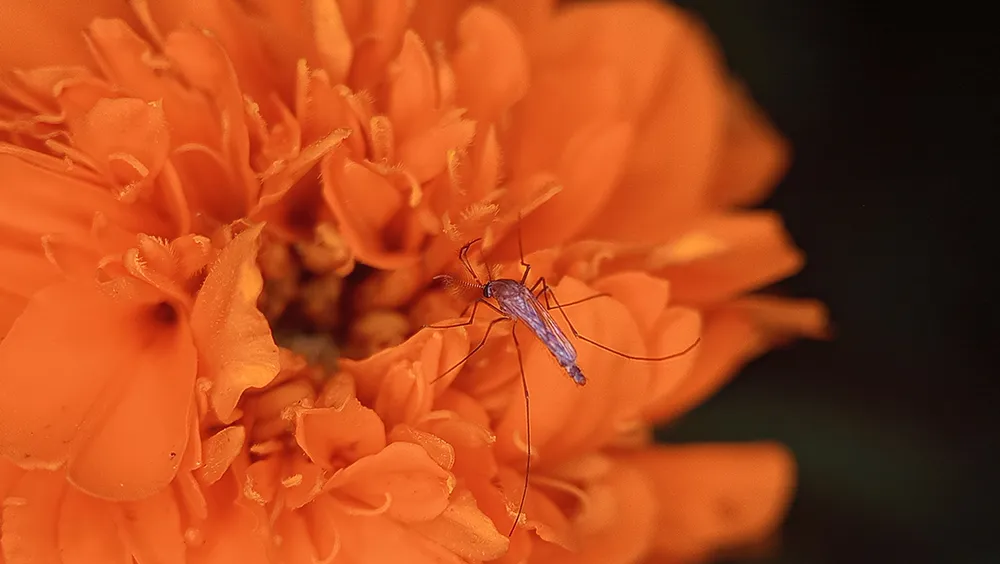
Bright, brassy marigold buds command attention in the garden, but it’s their distinct odor that deters mosquito and other pesky bugs from invading their space. Marigolds do double duty when planted in pots and placed on decks and porches. The sturdy flowers not only add a pop of bright yellow and orange to an outdoor space; they are extremely effective at keeping bugs at bay. Easy to grow, potted marigolds are always on duty, and they can easily be moved at leisure to keep insects away.
Sho Fly Yarrow
Yarrow, which also grows wild, is another effort free bug deterrent that is not only a hard worker, but a looker too! Yarrow’s fern like leaves and forever budding white flowers offer a complete season of fly control. For a double dose of bug repelling properties, fill bottles with sprigs of yarrow with a few marigolds mixed in. Use this “bug-off bouquet” as a centerpiece, or scatter several around during outdoor gatherings.
Yarrow also repels ants, making it a favorite plant with backyard picnickers. Spread leaves and flowers in areas where ants are found.
Note: Do not plant yarrow near where pets congregate as the plant can be poisonous to animals.
Catnip: Not Just for Fluffy Anymore
Catnip is very easy to grow, and the hardy perennial requires practically no attention! Cats love it, but mosquitos don’t. In fact, an earlier report by entomologists at Iowa State University revealed catnip is ten times more effective than the highly controversial chemical DEET in repelling mosquitos! Fast growing catnip thrives planted in the ground or in container pots, which makes it an ideal candidate to battle the buzzing insects. Try growing catnip in long deck rail pots to literally surround the outdoor sitting area with natural mosquito repellent.
Here’s how to take catnip to the next level of deterrent: a catnip bug spray!
To do:
- Harvest strong stalks of catnip with leaves.
- Pull off the leaves and process them in a food processor until they resemble pulp.
- Place catnip leaves in a saucepan.
- Pour two cups of boiling water over the catnip and allow it to steep for about 15 minutes.
- Strain the leaves out.
- Pour into a spray bottle and allow to cool in the refrigerator.
- Spray clothing to repel mosquitos and other pesky insects.
Lemon Balm: Citrus Bomb
Another very easy to grow herb, Lemon Balm has a refreshing citrus fragrance, but its claim to fame is its natural insect repellent properties. Lemon Balm grows quickly and is at home in the garden or in pots. Pluck leaves and scatter in areas where insects are bothersome. Or, simply crush a few leaves and rub on arms and legs to keep mosquitos away.
An effective Lemon Balm bug deterrent spray can be easily made by picking Lemon Balm leaves (add catnip also if you like) and stuffing them in a mason jar.
- Pour witch hazel (available at drug stores) over the leaves to cover.
- Screw on the lid and allow to steep in a cold, dark place for one to two weeks.
- Strain out leaves.
- This infusion concentrate can be used to whip up several bottles of bug repellent.
- Simply fill a small spray bottle or mister half way with the infusion and add water to fill.
- Use as you would any commercial insect spray.
Lovely Lavender
Lovely lavender has many virtues, not the least of which is the ability to deter mosquitos and other insects. Clumps of lofty Lavender grown near outdoor sitting areas offers a delightful seasonal fragrance, and it’s these same natural oils in Lavender that aid in keep the insect population away. Lavender is also hailed for its ability to repel fleas and ticks, which is yet another reason to grow it near where pets gather. Lavender grows tall and thick in patio pots, making it an excellent choice for container growing.
Citronella Scents
Most people are aware that Citronella is a main ingredient in natural mosquito repellents, including candles and oils. But the best way to reap the bug busting benefits of Citronella is to grow it in the garden, as it is strongest in its natural state. A quick growing grass, Citronella can grow several feet, making it a great privacy plant. Planting Citronella grass in large pots on a deck or patio provides a dual purpose: as a natural (and eye appealing) privacy screen and an effective bug deterrent.
While it’s debatable whether the growing leaves release enough of their deterrent oils to do a satisfactory job of keeping bugs away, it is a proven fact that crushing the grass is an excellent way to release the oils, which means you can simply crush the leaves and apply directly to skin.
Tansy: The Good Weed
Tansy, which is a weed, traces its history as an effective mosquito repellent to the Middle Ages to modern times. Modern research confirms oil from the plants is successful in deterring the insects. In fact, Tansy was such an advantageous herb for its antibacterial properties that in the 1600s it was deemed a “necessary” herb for gardens of that era. Tansy, which is related to the sunflower grows wild many regions of the Northeast. The weed’s strong aroma enhances its insect repellent properties. And, the weed is often planted as a companion plant in organic gardening to repel insects from crops.
Nicknamed “Golden Buttons,” the weed is both adored and abhorred. Loved for its daisy like flowers and medicinal and repellent properties, and disliked due to its habit of invading the garden with Tansy “weeds.”
Pennyroyal Makes Fleas Flee
Pennyroyal, a member of the mint family, is another plant that has been used to keep insects away for centuries. The plant is especially successful at repelling mosquitos and fleas.
Mother Earth News reports pennyroyal stems stuck in your hat and pockets really will repel gnats and mosquitoes, noting dog owners often see their dogs rolling in pennyroyal patches, and dog instincts can usually be trusted.
The magazine also recommends:
- Scattering dried pennyroyal leaves around pets’ bedding area
- Rolling up some fresh stems in your dog’s bandana before hiking in the woods
Mother Earth also notes pennyroyal oil used in flea collars has largely been phased out because it caused miscarriages in cats, so only use the fresh leaves. If a pet or person could be expecting, don’t use pennyroyal at all.
All Purpose Herbal Insect Repellent
Ingredients:
- One tablespoon catnip
- One tablespoon lavender
- One tablespoon mint (spearmint or mint)
Directions:
- Boil one cup of water stir in four tablespoons of herbs above.
- Cover and allow to cool.
- Strain herbs and mix the resulting liquid with one cup rubbing alcohol.
- Dispense into a spray bottle cool.
- Strain herbs and mix the resulting liquid with one cup rubbing alcohol.
- Dispense into a spray bottle.
More Bug Busting Herbs & Plants:
- Bay leaves: Flies
- Chrysanthemums: Ants
- Basil: Flies, Mosquitos
- Mint: Ants, Fleas, Ticks
- Lemongrass: Fleas and Ticks
- Sage: Ants, Fleas and Ticks
- Geraniums: Fleas and Ticks
- Chives: Flies
- Garlic: Mosquitos
- Peppermint: Mosquitos
- Clove: Mosquitos
- Eucalyptus: Mosquitos
- Oregano: Mosquitos
Win Dinner for Two at the Publick House
Your tips can win you a great three course dinner for two at the historic Publick House Historic Inn in Sturbridge! Simply send in a hint to be entered into a random drawing. One winner per month will win a fabulous three course dinner for two at the renowned restaurant, located on Route 131 across the town common in historic Sturbridge. Because I’m in the business of dispensing tips, not inventing them (although I can take credit for some), I’m counting on you readers out there to share your best helpful hints!
Do you have a helpful hint or handy tip that has worked for you? Do you have a question regarding household or garden matters? If so, why not share them with readers of the Spencer Journal? Send questions and/or hints to kdrr@aol.com. Hints are entered into a drawing for dinner for two at the historic Publick House Inn.
Take the Hint!
A Reader Exchange of Helpful Hints and Handy Tips
Hello All! For those familiar with this column, welcome back! For new readers, please know that I am excited to re-launch the Take the Hint column that started in the 1990s with the Southbridge News daily paper and expanded to include all of the Stonebridge Press papers. Running for three decades in print, until late last year, and on 98.9 FM radio for over a dozen years, the Column has served as a labor of love for me, and a great exchange of ideas with readers and listeners.
Your feedback is welcome! And as usual, your tips and tricks can earn you a fabulous three course Dinner for Two at the Publick House in Sturbridge! A random winner will be drawn each month. Let’s do this all over again!
Send your favorite tips to: kdrr@aol.com
Your submissions will be published in the Spencer Journal and a link to the columns will be shared on Facebook.
About Karen Trainor
Karen Trainor’s career history includes covering local politics as a Worcester Telegram & Gazette correspondent for 20+ years, and reporting local news for Stonebridge Press daily and weekly papers, as well as Managing Editor of the Brimfield Antique Guide and Our Town newspapers. Her longtime column, “Take the Hint!” ran in several Stonebridge publications each week, and she voiced daily radio snippets of the column on Oldies 98.9 FM in Worcester; as well as weekly radio shows on WESO AM, and Real Oldies 1250.