|
Getting your Trinity Audio player ready...
|
As summer yard sales wind down and the last Brimfield Flea Market Show of 2026 is in the books, shoppers are likely left with not only treasures, but some regrets, too.
Taking home a well-loved vintage find is a lure of the market, but once home, the reality of sprucing up a less than perfect antique or collectible can be daunting. Read on, for some creative and clever ways to make the repair and care of your acquisitions less of a chore, which translates into more time to enjoy your fabulous finds.
Note: Only use these methods with a “nothing to lose” attitude, as there is no guarantee the fix will work.
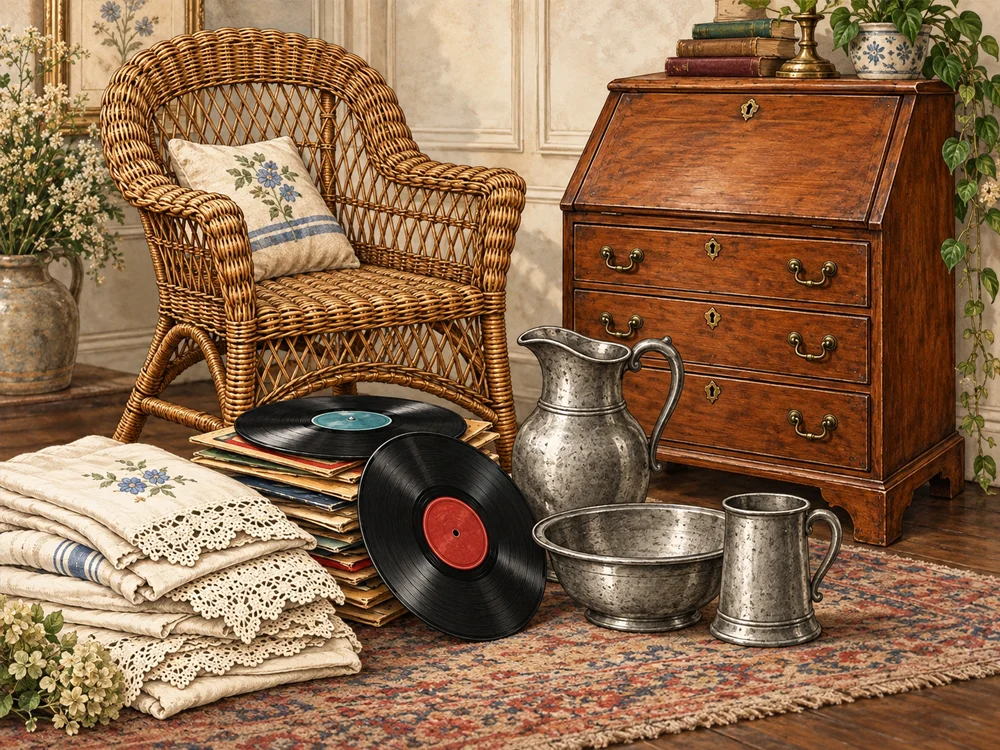
Vinyl records are enjoying a big comeback, but there is something special about the real deals. There are a few theories on how to best repair a warped vinyl record album, but this method is by far the quickest. (This should only be used as a last result as it could further damage the item.)
Place the album between two sheets of glass and cook it on a baking sheet in a warm oven (160-175 degrees) for 6-10 minutes. Allow to cool and check the warp. If it needs more pressing, repeat procedure with the oven a few degrees higher until the heat is effective.
For shallow warps, place the album between two pieces of glass in bright sunlight. Be sure to clean both the record and the glass before warming it up via either method.
Antique pewter can be successfully cleaned without the use of harsh (and expensive) chemicals. Try this “green” method to safely spruce up pewter: Dissolve one teaspoon salt in one cup white vinegar. Add enough flour to make a paste. Apply paste to pewter piece and allow to sit for up to an hour. Rinse with clean warm water, and polish dry.
Parchment lampshades are fantastic flea market treasures. However, cleaning the aged paper can be a challenge. To dust, take a new foam paintbrush slightly dampened and work your way around the shade both inside and out. For cleaning, experts advise wiping the shades carefully with a cloth soaked in milk. Wipe it dry with a clean cloth.
Note: Be sure to test these methods in an inconspicuous area and allow to dry before treating the entire shade.
Old wicker baskets can be fragile. To safely clean them without cost (and effort) simply bring them into the bathroom with you the next time you take a shower. The hot, moist steam hydrates the baskets and prevents them from splitting. Just wipe them clean.
While some scratches and dings add to the charm of a vintage furniture piece, wood surfaces with deep gouges call for repair. Such defects are easily and inexpensively fixed with a wax stick or crayon in a color close to the wood (and a little elbow grease). Heat up the wax or crayon with a hair dryer and when pliable force it into the crack. For larger gouges melt the candle and carefully pour to fill the cavity. Allow to set, then wrap a lint free rag around a sanding block and rub the repair to make it even with the wood.
If you display small vintage collectibles on a shelf and find them difficult to dust, try this renovator’s tip to prevent damaging the vintage valuables: Apply a dab of dental wax on the bottom of each object to stick them to the surface. This way, you can easily dust the area with a feather duster without the risk of knocking over the items.
To remove the musty smell from an old trunk or dresser drawer, try this old-fashioned method: Fill the item with fresh grass clippings and close tightly. Stir the grass each day for a week. The chlorophyll from the grass absorbs the smell. Or, fill the drawer with an open can of used coffee grounds for several days.
Rust spots are a common stain on vintage linens. To remove the spots, mix up a past of salt and white vinegar and apply to the stain with a toothbrush until spot is gone. Rinse thoroughly. To whiten aged doilies soak them in a solution of three parts water and one part white vinegar.
Old aprons and pre “permanent press” items often require proper starching. Here’s an old fashioned mixture for spray starch that grandma made for pennies, and it is just as useful today: In a large spray bottle, mix together one heaping tablespoon corn starch and two cups cold water. Shake until thoroughly blended. If you want to add a touch of freshness to your starch, add a couple drops of non-staining lavender oil. Shake before each use, and spray items before ironing.
Aged, delicate chains can easily become knotted, especially in a jewelry box. To untangle a knotted necklace chain, place a few drops of cooking oil on a piece of waxed paper. Lay the knot in the oil and use two common pins to work it loose.
An ounce of prevention…
- Don’t display your vintage dishes on plate hangers unless the clips are covered to prevent scratches on china and porcelain plates.
- Prevent marble damage by keeping marble tables and sculptures away from fireplaces or heaters. The marble can discolor from smoke and could even crack if located too close to a heat source.
- Have an old barometer? Mercury will expand or contract according to temperature. To retain the accuracy of mercury barometers, they should not be positioned too close to central heating radiators.
- Never store antique glass ornaments in a damp basement or attic. Mildew can form and damage the glass.
- Prevent fading of vintage tin signs by avoiding the ultraviolet rays of the sun and fluorescent lights, both of which will fade tin pieces.
- Toys with batteries should only be stored with batteries removed. Be sure to check for corroded cells in old toys that have been in storage.